Development is a multidimensional process transforming countries from low-income to high-income, sustainable economies. It includes economic growth (measured in terms of GDP), as well as improvements in living standards, human capabilities, health and nutrition, education, and institutional quality. Further, according to thinkers like the Nobel Laureate Amartya Sen, it emphasizes the expansion of human freedoms and equity.
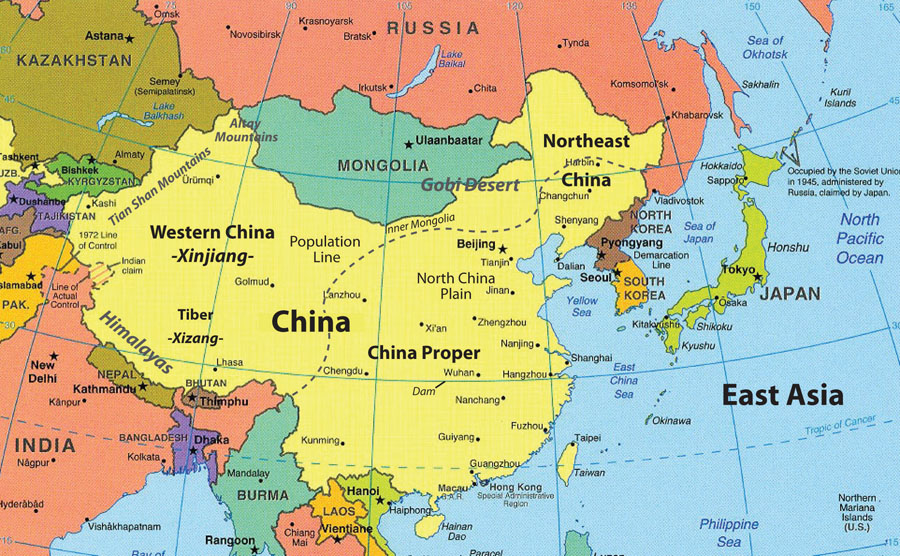
In Asia, rapid economic growth occurred alongside both democracy and authoritarianism.While economic growth occurred under democracy in some countries like Japan and South Korea, high economic growth was achieved under authoritarian rule in China and Vietnam. Cambodia, an authoritarian one-party state, has been experiencing rapid economic transformation. Between 2000 and 2019, Cambodia was the fifth fastest-growing economy, averaging over 8 percent annual growth. However, it faces challenges related to the need to improve educational and health outcomes.Singapore achieved rapid economic development with a representative parliamentary democracy in form but with an authoritarian, one-party rule in practice.
Several South East Asian countries have flawed democracy. Thailand, a constitutional monarchy, with the military holding substantial power and influence over government, has achieved remarkable economic development over the past five decades, transforming from a low-income agricultural society to an upper middle-income industrial and service-based economy. Thailand is a key Southeast Asian player focused on technology-driven growth.The Philippines, a constitutional republic, often faces issues with constraints on civil liberties, rule of law, and political violence. It is pursuing rapid growth with the aim of achieving upper middle-income status by 2025-2026. However, despite strong economic performance, growth does not benefit all income groups. Malaysia is a parliamentary democracy with a constitutional monarchy, but faces challenges regarding civil liberties, freedom of speech, and political competition. Its economy is experiencing robust growth, fueled by the services and manufacturing sectors. It has successfully reduced absolute poverty, shifting focus to narrowing inequality. Indonesia suffers from declining civil liberties, shrinking civic space, and high corruption. As of mid-2026, Indonesia is experiencing steady economic growth, driven by strong performance in agriculture, services, and net exports.
South Asia is experiencing a significant backsliding in democratic governance, with most countries classified as "flawed democracies" or "hybrid regimes", characterized by weakened institutions including the judiciary and the media, restricted civil liberties, elite capture of state institutions, violent political instability, electoral fraud, military-influenced politics, and dynastic politics (Bangladesh, India, Pakistan, and Sri Lanka). India faces issues with political polarization, communal tensions, and the shrinking space for dissent. As of 2024, elections in Bangladesh, Pakistan and the Maldives were marred by controversy and violence. Although Bhutan holds free and fair elections, there is limited political participation, restricted freedom of expression, and low civil liberties. Ethnic tensions and social disparities have hindered democratic processin Nepal. Afghanistan is an authoritarian regime, following the Taliban takeover.
Between 2001 and 2021, Afghanistan attempted a Western-backed democratic transition, resulting in improved rights, education, healthcare, infrastructure development, media freedom, and a fragile economy; however, the effort was undermined by high corruption, aid dependency, and a resilient Taliban insurgency, that effectively ended this era in 2021.
Bhutan's transition to a democratic constitutional monarchy was initiated by the monarchy itself. Since the first national elections in 2008, the country has focused on integrating democratic governance with its core development philosophy of Gross National Happiness (GNH) aimed at balancing economic growth with social progress.
Bangladesh has experienced civilian rule, military rule and autocratic regimes in the guise of democracy. Since 1991, Bangladeshhas achieved impressive economic growth and social development, marked by increased per capita GDP, reduced poverty (though increasing in recent years), infrastructure development, improved life expectancy, reductions in child mortality, gender parity in education, and women's empowerment, though significant disparities exist across regions, and socio-economic groups. Further, this development has occurred with rising inequality, high-income concentration (top 10 per cent holding around 41 per cent of income), alongside a weakening democratic process.
Initially, India focused on a "command and control" economy, characterized by public ownership. However, dissatisfaction with low growth led to a shift towards a market-based, liberalized economy to boost development, though it continues to face challenges in achieving rapid, inclusive economic growth. Further, India continues to face major challenges, with political polarization, shrinking space for dissent, low social indicators, large numbers of malnourished children, and a large proportion of the world's illiterate population.
The Maldivesis a young democracy. Since 2008, it has been undertaking efforts to establish stable democratic institutions and promote development. The country has seen dramatic political shifts, including a 2018 transition of power.The country has achieved rapid economic growthand high female literacy,transitioning from a least-developed country to an upper-middle-income country by 2011. Despite high per capita GDP, the vast majority (over 90 per cent) of the poor live in atolls outside the capital of Malé.
Nepal's journey towards democracy and development is a turbulent transition from monarchy to a federal republic.Development has been slow and inequitable (with high unemployment, uneven poverty reduction) and disparities in development outcomes based on gender, region, and ethnicity. Nepal struggles with political instability, corruption, and frequent government changes since 2008, stalling policy continuity and hampering development.
In Pakistan, democracyhas faced a turbulent history, marked by frequent shifts between civilian governments and military regimes. Political instability and high corruption under elected governments have adversely affected the country's development. Some studies suggest that economic growth was stronger during military regimes compared to democratic governments (in terms of rapid industrialization), while others suggest that, in the long run, democracy has a positive impact on economic growth.Democratic processes have generally fostered better social outcomes,although political instability has hindered progress.
Sri Lanka maintains a long-standing tradition of electoral democracy, though strained at times.Its economic development has faced challenges from political instability. Development has often favored urban population. Nevertheless, Sri Lanka has high social indicators for South Asia, particularly in education, health, and access to clean water and sanitation. Further, although Sri Lanka has the lowest headcount poverty index in South Asia, economic challenges have recently hit the poorest. Poverty reduction has slowed, with regional disparities in areas like the Northern Province and the plantation sector.
The above evidence indicates that there has been "development" in Asia under democracy, authoritarianism as well as under flawed democracy. However,the benefits of such "development"have generally been uneven, marked by significant disparities among socio-economic groups and disadvantaged regions. Further, neither democracy nor autocracy can guarantee progress on its own. In order to achieve long-term sustainable development, there is need for political stability, rule of law, strengthened institutions, transparency and accountability, enhanced equity and human rights, and efforts undertaken to ensure environmental sustainability.
Barkat-e-Khuda, PhD is a former Professor and Chairman, Department of Economics, University of Dhaka, he also held senior positions in leading international organizations, including icddr,b. barkatek@yahoo.com
© 2026 - All Rights with The Financial Express

