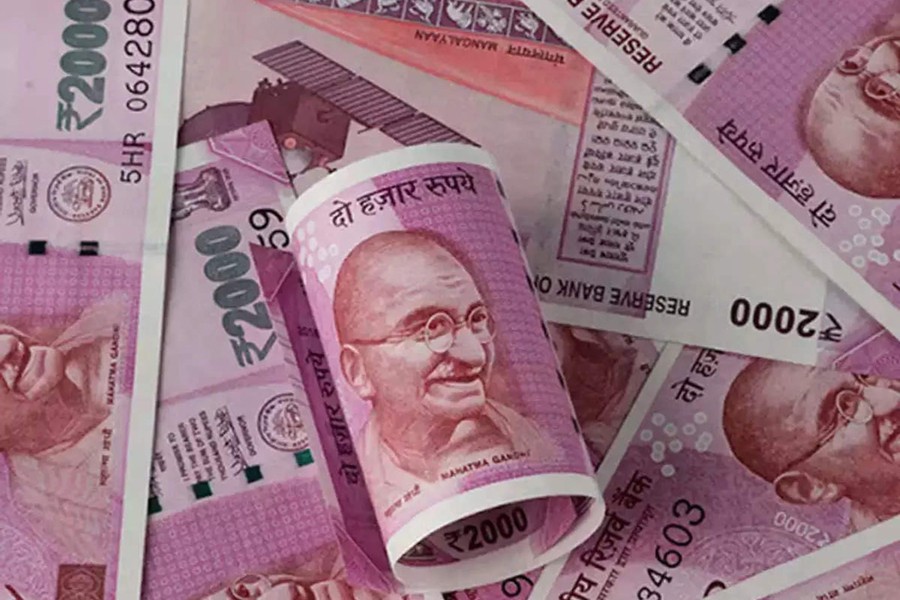
It is now a matter of time to start bilateral trade in Bangladeshi currency Taka and Indian currency Rupee along with the US dollar. Both countries agree to this. The process is moving fast. The two countries are working towards starting commercial transactions in taka-rupee next September. Official announcement may come even before that.
CURRENCY SWAP: When two countries trade with each other in their own currencies, avoiding the dollar or any other hard currency, it is called a 'currency swap arrangement' in financial terms. Like many other countries in the world, Bangladesh also faced a dollar-crisis, first due to Covid and then due to the Russia-Ukraine war, which is still ongoing. On top of this, import costs were increasing. To deal with this situation, Bangladesh Bank has taken various steps to control imports. In the meantime, in the commerce ministerial meeting of the two countries held in the Indian capital Delhi in December last year, India made a verbal proposal to use the Bangladeshi taka and their rupee in bilateral commercial transactions. If the proposal becomes effective, import-export trade between the two countries will be done through currency swap system or exchange of own currency.
CURRENT STATUS: India took the initiative to trade with Bangladesh in taka and rupee once in 2013, 10 years ago. Later, the matter did not proceed further. On February 24-25 this year, on the sidelines of the G-20 conference held in Bengaluru, governors of the two countries' central banks discussed the matter.
India's central bank, Reserve Bank of India (RBI), has already removed existing legal barriers to international transactions in Indian currency. The country's finance ministry also advised trade associations and banks to trade with countries in rupees. India has already started trading in rupees with Mauritius, Iran and Sri Lanka. They want to increase the value of the rupee in the international market. For this, the country has started discussions not only with Bangladesh, but also with many other countries including Russia. For now, transactions will start through four banks of two countries each. Accordingly, Bangladesh's Sonali and Eastern Bank and India's State Bank of India (SBI) and ICICI Bank have started the process of opening mutual accounts.
PROS: According to the data of Bangladesh Bank, in the fiscal year 2021-22, Bangladesh imported goods worth 8 thousand 916 million US dollars. Out of this, 1 thousand 369 million dollars' worth of goods were imported from India. In the same fiscal year, Bangladesh exported goods worth 200 million dollars to India. In other words, trade between the two countries is 1 thousand 568 million dollars in total import and export. Bangladesh is not far from the current geopolitical situation. Russia, China, India-all are slowly moving away from the dollar. We also have to think of alternatives to the dollar. Our export of 200 million dollars with India can be started with rupees.
The government will be able to import necessary goods from other countries with the 200 million dollars that Bangladesh will save as a result of transactions in rupees. Both countries will benefit from this. There will be no risk as the trade is pegged at 200 million. Since these transactions will be based on bilateral negotiations, the cost of frequent currency conversion will be reduced. Bangladesh can save on exchange rates.
Moreover, regular travelers from Bangladesh to India also find it a profitable way. If someone from Bangladesh is traveling to India, he/she has to endorse dollars in the passport. Those dollars have to be converted into rupees and spent in India. Travelers report losing money due to currency exchange twice. The exchange rate of the US dollar in Bangladesh has been fluctuating between Tk 106 and Tk 110 in recent times. Accordingly, the cost of buying 100 dollars is 10,600 to 11,000 taka. In exchange for these 100 dollars, Indian rupees are available at eight thousand two hundred to eight thousand three hundred. But if this transaction is done directly in taka and rupee, then the same amount of taka would get Indian rupee like 13 thousand to 14 and a half thousand, which is a huge difference.
CONS: First of all, rupee is not recognised as a global currency. On top of that, there is a danger of reaching a one-sided currency or rupee-based exchange structure. Since Bangladesh is facing a major trade deficit with India, the country may be at risk in dealing with rupee. Because, once the process starts, it will not only be limited to commodity trade, but will also spread to travel, medical, education etc. There should not be a situation like taking a loan of rupees from an Indian bank to meet the import expenses. In that case, the burden of interest expenses will increase. Again, there is a fear that India will increase the rate of rupee against the Bangladeshi currency from time to time. India has many products whose raw materials it has to import from other countries in dollars. Exporters can charge higher prices to export such products to Bangladesh. This transaction will become risky for the businessmen of Bangladesh.
END NOTE: There is no unmixed blessing on earth. Everything has its merits and demerits. Similarly, this currency swap has its own merits and demerits. India is the closest neighbour of Bangladesh with frequent movement of people, and one of the largest trading parters. Considering the declining reserve and the current global scenario, this initiative of currency swap can be a good start for Bangladesh.
Dr.Susan Thomas is an economist and freelance columnist.
susanthomas4012@gmail.com
© 2026 - All Rights with The Financial Express

