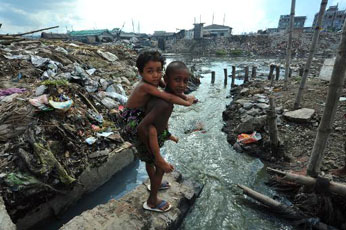
 Hazaribagh: Industries Minister Amir Hossain Amu on January 24, 2015 asked the tanners to relocate their factories to the newly established tannery zone in Savar by March this year.
 It is indeed an irony in Bangladesh that nothing happens as per decision unless compelled to do it. Whatever reforms one sees today taking place in the field of readymade garment (RMG) industries with regard to compliance issues could have been taken decades ago had our entrepreneurs been a little mindful about it. Warnings were oft-repeated with none to heed to those.
And when foreign buyers of apparels started looking to other outlets in foreign countries due to stiff consumer resistance, only then did our RMG entrepreneurs start reforming their industries and adopting related practices with support from retailers, the ILO and other agencies. The suspension of the Generalised System of Preference (GSP) by the United States also hastened the pace of reforms.
The same is the case with the leather industry. A separate industrial estate was established at Savar for relocation of tanneries from Hazaribagh but most of the tanners have seemingly turned a deaf ear to the government as well as the environmentalists and other stakeholders.
What is surprising is that so long one used to see newspapers carrying warnings of concerned Ministers on delay in relocation of tanneries. Even a deadline was set by June this year for the relocation. But only last week, we are all surprised over a FE report that said even the central effluent treatment plant (CETP) is not yet ready at Savar. So it is not understandable why the tannery owners were given warning every now and then. How can they relocate the tanneries without a CETP established there? It is like putting a horse before a cart, not ahead of it.
If the CETP is not made operational by June, how could the tanners move their factories to Savar by that time and instantly operate those?
It looks funny that the authorities have directed a foreign joint-venture company after long days of hibernation to complete the CETP at Savar Tannery Estate by June this year or face the music. It is very hard to believe that the project, taken up more than 10 years back, is yet to be implemented.
Like the USTR, the European Union has already threatened to stop buying leather products from the country if the sector manufacturers do not produce environment-friendly and globally compliant goods.
Leather and leather products could serve the country as a golden goose like the RMG if production could meet strict environmental concerns. Experts say Bangladesh can easily earn at least US$ 5 billion in exports from leather, leather goods and footwear annually by 2018 if it can properly address environment and compliance issues and give policy support for higher value added products in the sector. The leather sector is quite similar to the garment sector, but the scope of value addition is far greater. The value addition in the sector is close to 90 per cent as opposed to 40 per cent in the garments sector.
Happily, the Bangladesh Bank (BB) has come forward to help the Hazaribagh tanners to relocate their factories to Savar. Tanneries which have already moved there from the toxic tannery hub of Hazaribagh or under process to do so have been given an opportunity to shift their irregular loans into block accounts and will have eight years for repayment, with a one-year grace period. They have been given relief as they will be charged 10 per cent interest on the loans in the block accounts or banks' cost of fund or whichever is lower.
The BB also allowed banks to consider relaxation of the existing down payment while rescheduling old loans or awarding new loans for tanneries involved in exports. Tanners will be able to free their collateralised property if they can show equal collateral. To take the incentives, tanners will have to begin the process of relocation within the next six months, a BB notice said.
It is time for the government to take stock of genuine grievances of tanners on relocation. The amount of irregular loans with the tannery sector now stands at around Tk 4500 million, of which Tk 2500 million is in accrued interest. Tannery owners also have urged the government to provide long-term loans at single digit interest to expedite relocation.
Of the total exports from the leather industry, 60 per cent go to the European Union, 30 per cent to Japan and 10 per cent to the rest of the world, according to industry insiders. The industry, which has grown on local raw materials, has now emerged as the second largest export earner after garment. But the fact remains that Bangladesh's leather exports account for just 0.56 per cent of the global leather and leather goods market worth around $230 billion.
Bangladesh can substantially raise its presently very small share of the vast global market if the tanners are given adequate props like those given to the RMG sector. Once the relocated tanneries at Savar start production as per set guidelines preferred by the buyers, these will fetch a bonanza for the national exchequer in terms of foreign exchange earnings.
arjayster@gmail.com
© 2026 - All Rights with The Financial Express

