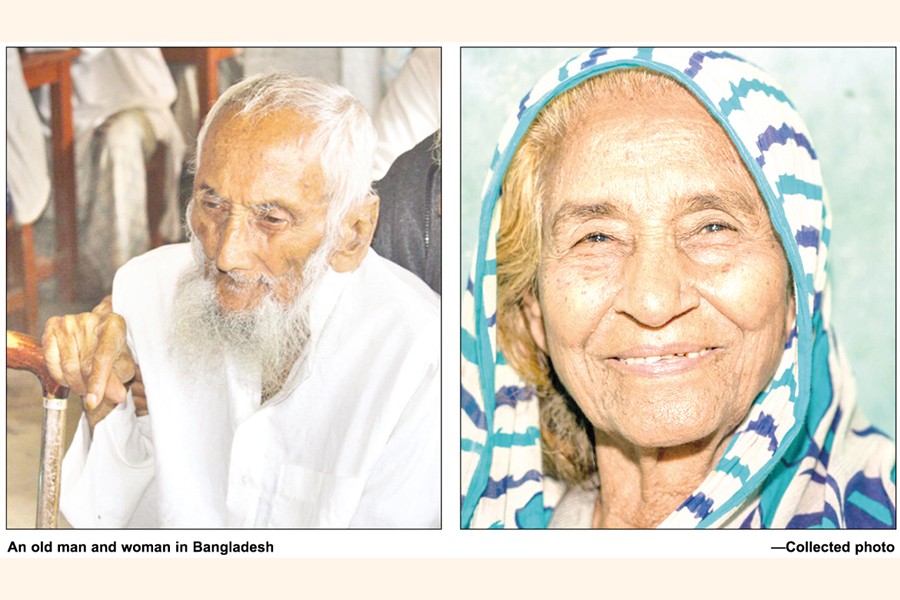
To age gracefully is a process which most of the elderly people around the world long to experience as they reach the sunset of their life. To people in the rich and developed countries the dream doesn't seem elusive. True these societies cannot ensure for their elderly population the required emotional support they need; but they do sufficiently meet the material needs of people belonging to this age-group. This dream hardly remains unmet. The facilities and preferences for the aging community appear in the Western societies in the forms of old people's dorms and residences. Lately, many middle-income countries have even come forward to extend state-backed support to the people considered 'misfit' for living with their offspring. There is a common notion in circulation. According to this definition, the freedom-loving sons and daughters preferring an independent life to the comfortable shelters at their parental homes is the normal picture. In fact, this is partly true.
Despite the prevailing tradition in the West of exiling the elderly people to a world filled with loneliness, they do not repent it. It has emerged as the practice in societies in the rich, industrialised countries. The big issue is the process of aging gracefully. It matters little if they age without their elderly children at their residences or old-age homes. All elderly persons dream of aging peacefully.
Grown-up children play a great role in the process of elderly people's aging. Detaching themselves from parental homes, however, doesn't mean these children, upon reaching 'adulthood', nurture plans to sever ties with the parents. In many cases, distance strengthens emotional bonds --- on the part of both children and their parents. In the West, parents, on special days, wait eagerly for their sons and daughters. The grown-up children hardly miss the lunches and the gala dinners on the Thanks Giving Day every year. The surges of emotion and the warmth effusing from the exclusive family reunions eventually take the form of a highly emotional get-together. To speak concisely, it is the prevailing culture that forces the young adults in the West to remain detached from the parents. But they never hesitate to visit their places of birth on urgencies, like planning their careers and professions. The doors of parental homes do not remain closed to them. They can visit their dads and moms to discuss their future plans.
Compared to the affluent and enlightened societies, the poorer ones often emerge as quite insensitive. In many countries boasting their oriental legacy, signs of blatant apathy towards the elderly people are now rampant. Small instances make the phenomenon clear. In many of these countries, it is the university-educated new adults who do not feel like discussing their career issues with their half-literate parents back home in the village. Maybe, they might view it unnecessary. This is, however, not the normal scenario. In a lot of tradition-bound countries like many others in the East, educated youths cannot think of taking a career-related decision without consulting their parents. These norms are encountered in a number of countries including those in South Asia. In this vast region it is the ancient oriental values that define society's relations with the older people.
Traditionally revered as wise old men and women, the senior citizens occupy a special place in the South Asian countries. They constitute a distinctive class of both the poorer and affluent segments of society. Being the members of a patriarchal social structure, the members of a large rural family in Bangladesh conventionally turn to the wizened senior citizens at moments of crises. In the distant past, the old men and women didn't disappoint the family members, nor did they dishearten people from the larger community. With the creeping of the elements of decay into the rural social structure, the elderly people began fading into the mist of the past. The advent of the so-called modern times brought even the village people to the harsh reality of apathy for the elderly members of a family. At the same time, economic crises of various kinds eventually began pushing the general people into poverty and other states of destitution. This turn of things proved to be the source of a lot of adversities for the earlier revered older people. They began being marginalised in the greater rural society.
With the elderly sections of people displaced from their previous status in villages, the only option they had found open before them was a detachment of sorts from the social mainstream. This was how the aged in this country were made to emerge as a social burden. In the developed world, it is the generational and cultural gap that detaches the adult offspring from their parents. Economic reasons play a minor role there. In Bangladesh it is exclusively the economic hardship and the following sufferings that isolate the previous breadwinner from a family. In spite of their inhuman labour put into work for earning money, the elderly family head is not given any added concession. To the family members, it is the frail old man's obligation to earn money for his family. Many of these elderly people are seen engaged in works like pedalling cycle-rickshaws at a high summer noon.
In contrast to the picture obtained from the urban maginalised people, the lower-middle and middle classes show a semblance of respect to the male and female elderly family members. It's because, these grandpas and grandmas can be engaged in the task of taking children to school and bring them back home. They can be engaged in other familial jobs like shopping kitchen items on emergency. Thanks to their being involved in scores of essential household jobs, the elderly males and females hardly feel the necessity of living in their village homes alone. If the older persons happen to be educated, they may help in preparing the homework of their grand children. Living with the families of their sons and daughters, may eventually kill their urge to rent a seat at high-expense rooms at the old-age homes. On becoming a respected member of the families of their sons and daughters, these elderly persons might feel deterred from enrolling with the highly disciplined old people's homes.
As the old age demands, the elderly people are in search of the peace of mind and solitude. The moneyed but genuinely lonely persons long to spend their last days of life undisturbed and in tranquility. The problem with the old-age homes is their inadequate numbers against their demand. What prompts their demand to rise is their popularity with many a young person doing high-salary jobs abroad. A lot of them, with few close relatives, leave their parents behind in Bangladesh. In such a situation, they have to resort to making arrangements for well-furnished and comfortable rooms at the old-age homes, no matter how expensive they may be. Unfortunately, their demand and the homes' availability do not match always. In such a situation, the poor availability of the old people's dependable shelters continues to be a festering problem. Going by the general trend, the demand for the old-age homes remains limited. But the fact remains, their demand keeps rising among a particular class.
Thanks to the old people's shelters at one or another 'family home', their commercial demand remains limited to narrow confines. They are few in the large cities, prompting their rent to soar without let-up. A salient feature of living at old-age homes is it has yet to become a social culture in Bangladesh. Being in a tradition-bound country, rural folks still turn to the wizened elderly people for solutions to many a riddle of life. In the urban areas the elderly people miss their admirers. In that situation, they learn how to age in their own ways. Society should ensure that the old people enjoy the right to age gracefully.
shihabskr@ymail.com
© 2026 - All Rights with The Financial Express

