From protracted wars and geopolitical realignments to climate extremes and economic uncertainty, 2025 emerged as a year that tested global resilience and reshaped international priorities
tariffs heighten
global trade
tensions
On April 2, US President Donald Trump announced the imposition of reciprocal tariffs ranging from 10 to 49 per cent on most imported goods in a move to protect domestic production. The decision upended the global trading order, disrupted supply chains and pushed gold prices to record highs. Economies worldwide were forced to adjust policies and accelerate negotiations to secure trade agreements. Amid the escalating tariff war, US-China trade tensions reached their most serious level since 2018.
Gen Z protests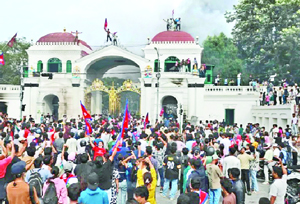 A wave of youth-led 'Gen Z' protests has spread from Nepal to the Philippines, Peru, Morocco and Madagascar, driven by the frustration of the youth for the corruption, inequality, poor public services and social media censorship. In September2025, the Gen Z protests in Nepal shocked the Himalayan nation's dispensation, which was accused of rampant corruption and indifference. Even as the protesters ran riot, destroying everything that came their way, with the police and even the army supporting them, Prime Minister KP Sharma Oli had to step down.
First American pope
Smiling and unassuming, Prevost, born in Chicago and counted among the moderate cardinals, took the name Leo XIV. The new pontiff, who was for nearly 20 years a missionary in Peru, whose citizenship he has taken, continues his predecessor's work with social action for the poor, immigrants and ecology.
Ceasefire in Gaza and Israel-Iran war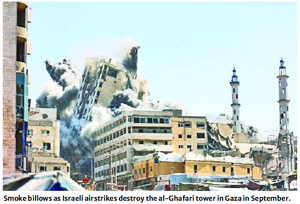 Trump's initiative led to a ceasefire between Israel and Hamas in December 2025, two years after a devastating war began in the Gaza Strip. The truce allowed for the return of the last surviving hostages to Israel and most of the bodies of the deceased, in exchange for the release of Palestinian prisoners. In June 2025, Israel launched Operation Rising Lion, a massive airstrike campaign targeting Iran's nuclear facilities at Natanz, Fordow and Isfahan, citing Tehran's programme as an existential threat. Iran retaliated with missile barrages on Israeli cities and military bases, escalating a long proxy war into direct confrontation that drew US involvement, with American strikes on Iranian sites.
Artificial intelligence emerges as
a new front in global competition
Zohran Mamdani
wins NY mayoral race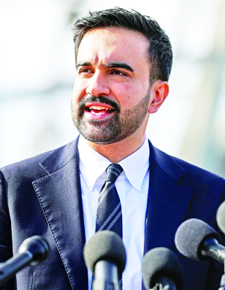 Zohran Mamdani won the 2025 New York City mayoral election on November 4, becoming the city's first Muslim and first South Asian mayor and its youngest in over a century. The Democratic candidate defeated former governor Andrew Cuomo and Republican Curtis Sliwa, securing just over 50 per cent of the vote. His campaign emphasised progressive policies and drew historic voter turnout.
Air India plane crash
Diplomatic efforts to end
Russia-Ukraine conflict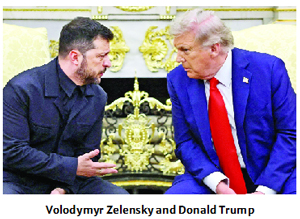 Diplomatic initiatives to bring an end to the Russia-Ukraine conflict gathered pace, with the United States and Europe putting forward peace proposals. US President Donald Trump held separate meetings with Russian President Vladimir Putin and Ukrainian President Volodymyr Zelensky, but failed to broker direct talks between the leaders of Russia and Ukraine. Meanwhile, the conflict continued in new forms, inflicting heavy losses on both sides.
the Louvre
On October 19, thugs in workmen's vests broke into the famous Parisian Louvre museum in broad daylight, using a lift normally used for removals, after breaking a glass panel. They then broke into exhibit windows and stole crown jewels, estimated to be worth 88 million euros, all within eight minutes. Escaping on a scooter, they dropped the crown of Empress Eugenia (wife of Napoleon III), which was found damaged.
 A record year of natural disasters worldwide
Climate change reached unprecedented extremes, triggering severe natural disasters across the globe, including earthquakes in Myanmar and super typhoons and floods in many Asian countries. Millions of people have been affected after Cyclone Senyar swept through Indonesia, Malaysia and Thailand, and Cyclone Ditwah battered Sri Lanka and India. The official death toll from the ongoing climate-fuelled disaster has climbed to more than 1,750 people in the worst-affected countries of Indonesia, Sri Lanka and Thailand.