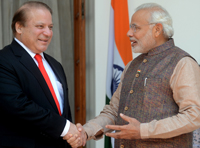
 INDIA : India\'s PM Narendra Modi talks with Pakistani Prime Minister Nawaz Sharif as they shake hands during a meeting in New Delhi Tuesday. — AFP
 NEW DELHI, May 27, (agencies): India's new Prime Minister Narendra Modi called on his Pakistani counterpart Nawaz Sharif to crack down on militant groups on Tuesday, while stressing his desire for better relations and trade, the foreign ministry said.
Modi "underlined our concerns related to terrorism," Indian foreign secretary Sujatha Singh said in a statement after talks between the leaders of the nuclear-armed rivals in New Delhi.
"We want peaceful and friendly relations with Pakistan, however for such relations to proceed it is important that terror and violence is brought to an end," Singh said.
She added that Modi conveyed that Islamabad needed to "abide by its commitment to prevent its territory and territory it controls being used to stage terror attacks on India".
India and Pakistan have fought three wars since independence in 1947, and relations remain tense amid mutual distrust and regular skirmishes along their disputed Kashmir border.
Ties between the neighbours deteriorated considerably after the Mumbai attacks of 2008, which killed 166 people and were blamed on Pakistani militants.
Modi also underlined his desire to improve commercial ties between the countries, a focus of efforts under the previous government.
"There was discussion on trade and we noted that we were fully ready to fully normalise trade and economic relations. Both prime ministers expressed their interest in having this done as early as possible," Singh said.
Modi held bilateral meetings Tuesday with eight regional leaders who attended his swearing-in ceremony Monday, including Afghan President Hamid Karzai, Sri Lankan President Mahinda Rajapakse and Pakistan's Sharif.
Meanwhile: Narendra Modi now has his finger on the country's nuclear button. As the PM, he will chair the "political council" of the Nuclear Command Authority (NCA), the "sole body" that can "authorize" a nuclear strike against an adversary in retaliation. But the final call will rest with him.
India does not have an elaborate nuclear command, control and communications system like the US, with its primary, alternative and even airborne national military command centres and posts. Or, the so-called "nuclear football", the special black briefcase with launch codes and secure satellite communication links, which accompanies the US President whenever he is away from the White House or command centres.
Nor does India have a Constitutional chain of "pre-delegated" succession, under which the nuclear launch authority is automatically transferred to the next in line if the US President is incapacitated. The vice-president is followed by 15 other successors in this clearly laid-down list.
© 2026 - All Rights with The Financial Express

