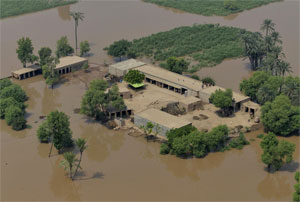
 PEER KOT (Pakistan): This photograph taken from a Pakistan army helicopter shows an aerial view of residents at their houses surrounded by floodwater in the flooded area of Peer Kot in Jhang, in central Punjab province Thursday. — AFP Photo
 MULTAN, Pakistan, Sept 11 (AFP): Pakistani troops Thursday rushed to protect two major cities from raging floodwaters, using explosives to divert swollen rivers in a crisis which has hit more than a million people and inundated swathes of farmland.
The floods and landslides from days of heavy monsoon rains have now claimed more than 450 lives in Pakistan and India, with hospitals struggling to cope with the disaster.
Between 300,000 and 400,000 people remain stranded in Kashmir, where phone lines have been down for days and food and water supplies are running low, although the floods have begun to recede.
The floodwaters are moving downstream through Pakistan's Punjab province, a key agricultural area and the country's most prosperous area.
The army on Thursday planted explosives to blow three strategic dykes to divert waters away from the southern Punjab cities of Muzaffargarh and Multan, a major agricultural centre and the main hub for Pakistan's important cotton industry.
Similar drastic measures were taken on Wednesday to protect the city of Jhang, further upstream, where 10,000 people were evacuated overnight, according to senior rescue official Rizwan Naseer.
Hafiz Shaukat Ali, a senior administration official in Multan, said all schools in the area would be closed for the next two days.
The military, which often plays an important role in disaster relief efforts, said troops had rescued 22,000 people stranded by floodwaters around Punjab and Pakistan-administered Kashmir.
The country's National Disaster Management Authority (NDMA) said 257 people had been killed and more than 1.1 million affected-a figure that includes both those stranded at home and those who fled after the floods hit.
In India, Prime Minister Narendra Modi held an emergency meeting on the disaster late Wednesday, after reports of victims attacking emergency workers as anger over the slow pace of the rescue effort boiled over.
Modi said getting food and water supplies to people in the worst affected areas in and around the state capital Srinagar was the priority.
He ordered a "massive effort to ensure basic hygiene and sanitation in the water-logged areas of Srinagar", a government statement said, amid fears of an outbreak of disease.
© 2026 - All Rights with The Financial Express

