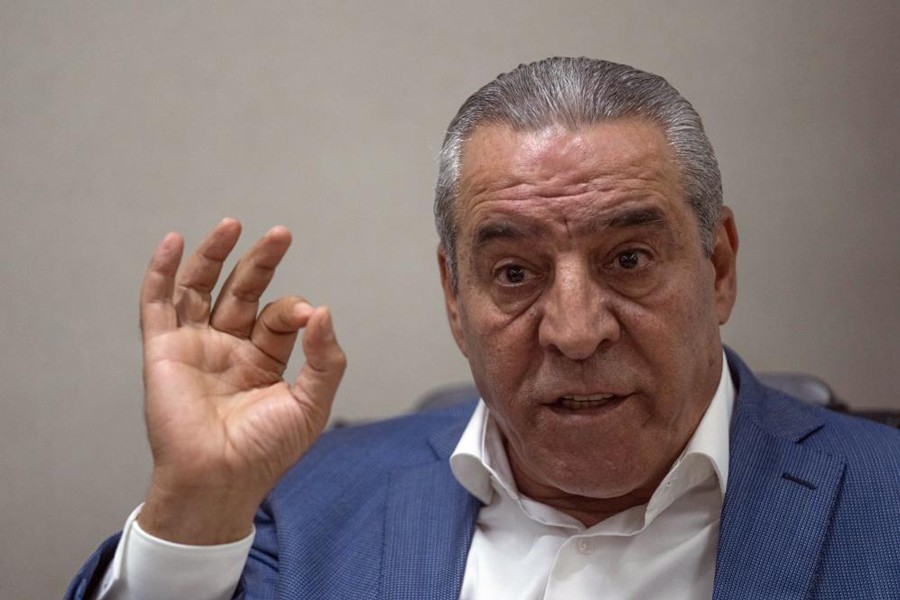
 Hussein al-Sheik
 RAMALLAH, June 14 (AP): Hussein al-Sheikh, a senior Palestinian official increasingly seen as a successor to the 86-year-old President Mahmoud Abbas, says relations with Israel have gotten so bad that Palestinian leaders cannot go on with business as usual.
But even if they are serious this time around, they have few options. And they appear unlikely to do anything that undermines their own limited power in parts of the occupied West Bank, which largely stems from their willingness to cooperate with Israel.
In an exclusive interview with The Associated Press on Monday, al-Sheikh defended the Palestinian leadership in the West Bank, saying it was doing the best it could under the difficult circumstances of Israel's 55-year-old military occupation. As the point man in charge of dealing with Israel, he said there is no choice but to cooperate to meet the basic needs of Palestinians.
"I am not a representative for Israel in the Palestinian territories," he said. "We undertake the coordination because this is the prelude to a political solution for ending the occupation."
Al-Sheikh saw his profile rise further last month after Abbas named him the secretary-general of the Palestine Liberation Organization. The appointment has generated speculation that al-Sheikh is being groomed for the top job - as well as criticism that the autocratic Abbas, who has not held a nationwide election since 2006, is once again ignoring the wishes of his people.
Al-Sheikh, 61, declined to say whether he wants to succeed Abbas. He said the next president should be chosen through elections, but that they could only be held if Israel allows voting in all of east Jerusalem, effectively giving it a veto over any alternative leadership.
"The Palestinian president cannot be appointed, or come to power by force, or come because of some regional or international interest, or arrive on an Israeli tank," he said.
Al-Sheikh recited a familiar litany of complaints: Israel's government is beholden to right-wing nationalists, its prime minister opposed to Palestinian statehood. Settlements are expanding, Palestinians are being forcibly relocated, and the U.S. and Europe seem powerless to stop it.
"The Palestinian leadership is on the verge of making major and difficult decisions," al-Sheikh said, when asked about Abbas' threat to cut security ties or even withdraw recognition of Israel, a cornerstone of the Oslo peace process in the 1990s. "We have no partner in Israel. They don't want a two-state solution. They don't want to negotiate."
But the Israelis meet with al-Sheikh all the time.
As head of the Palestinian body that coordinates Israeli permits - and a close aide to Abbas - he meets with senior Israeli officials more often than any other Palestinian.
© 2026 - All Rights with The Financial Express

