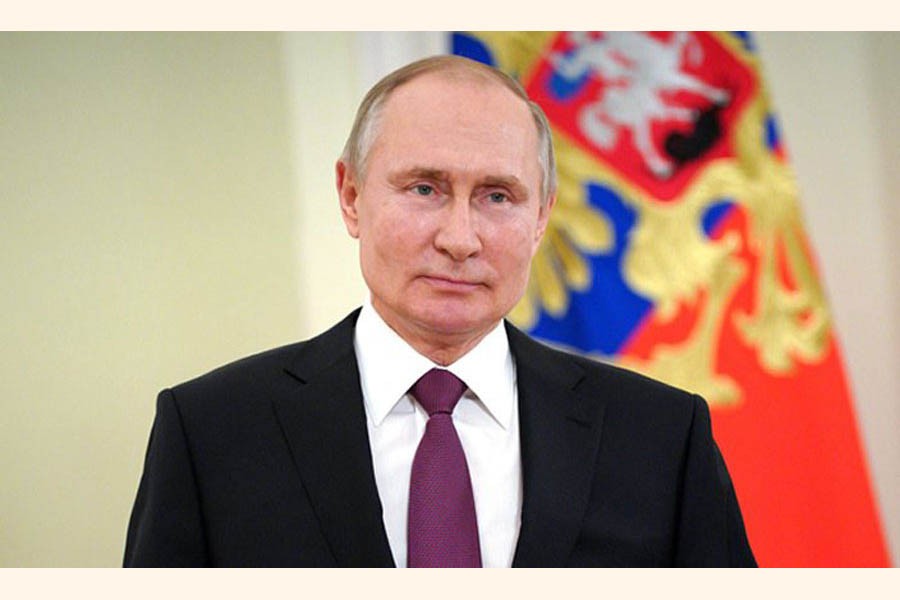
 Russian President Vladimir Putin
 MOSCOW, Mar 21 (AFP): An embargo on Russian oil imports, pushed for by some European countries over Moscow's military action in Ukraine, would have a direct impact on everyone, the Kremlin said Monday.
Some EU countries including Baltic states have called for an embargo on Russian oil and gas, while Germany has opposed an outright halt on Russian energy imports.
EU foreign ministers on Monday are meeting to discuss the situation in Ukraine and possible tightening of sanctions.
US President Joe Biden is set to attend an EU summit on Ukraine on Thursday in Brussels that will debate energy prices and supply security.
Kremlin spokesman Dmitry Peskov told journalists that an oil embargo "is a decision that will hit everyone".
"Such an embargo will have a very serious impact on the world energy market, it will have a very serious negative impact on Europe's energy balance," he said.
The United States this month announced a ban on Russian oil and gas, while Britain has said it will cut out Russian oil imports by the end of this year.
Peskov said that the Americans will be less affected by such a measure, and "will feel much better than the Europeans. It will be tough for the Europeans".
Meanwhile, Russia's FSB national security service asked a court Monday to "immediately" ban US tech giant Meta, accusing it of working against Moscow's interests during its "special military operation" in Ukraine.
The court was considering a request by prosecutors to designate Meta -- the parent company of Facebook, Instagram and WhatsApp -- as an "extremist" organisation and ban it.
The move is part of sweeping efforts by Moscow to put a tight lid on information available to Russians about the conflict in Ukraine.
"The activities of the Meta organisation are directed against Russia and its armed forces," FSB representative Igor Kovalevsky told Moscow's Tverskoi district court, Russian news agencies reported.
"We ask (the court) to ban Meta's activities and oblige it to implement this ruling immediately," he said.
After President Vladimir Putin sent troops into Ukraine on February 24, authorities blocked access in Russia to Facebook and Instagram, as well as to Twitter.
Meta had announced on March 10 that the platforms would allow statements like "death to Russian invaders" but not credible threats against civilians.
© 2026 - All Rights with The Financial Express

