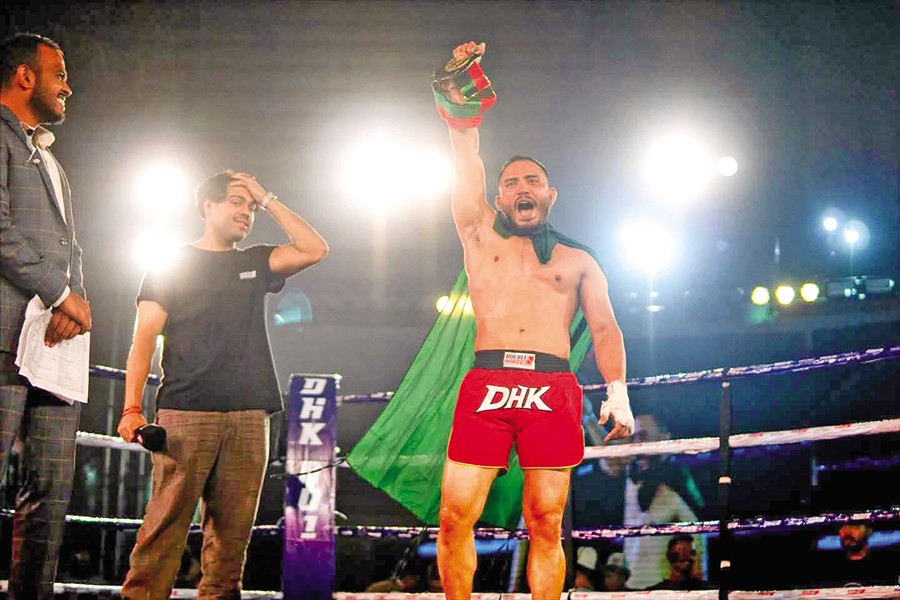
For decades, Bangladesh's sporting identity has revolved around cricket stadiums, football grounds and other sports. That landscape has expanded decisively with DHK001 or Double Horse Knockouts 001 having introduced professional Muay Thai to the national spotlight at an event. What unfolded is not merely a fight night but a signal that combat sports-when structured, sanctioned and patronised-can emerge as a viable sporting and commercial ecosystem in Bangladesh.
The landmark event of unveiling the game-changer took place on June 27, 2025 at the Bangladesh-China Friendship Conference Center in Dhaka. The DHK001 saw a full house (a record in combat sports) and featured an international fight card with athletes from Bangladesh, India, Thailand and Kyrgyzstan operating under recognised international sanctioning. The event marked one of the most organised Muay Thai showcases the country has seen, combining competitive legitimacy with production standards more commonly associated with regional fight circuits in Thailand and South Asia.
A defining highlight of the night was the inclusion of WMC (World Muaythai Council) championship bouts, a globally recognised governing body that lends international credibility to professional Muay Thai contests. The championships elevated the event beyond exhibition status, placing Bangladeshi fighters within an officially sanctioned global competitive framework.
Crucially, the results carried symbolic weight. Three Bangladeshi fighters emerged victorious against Indian opponents, a result that resonated strongly with local audiences. These wins were seen as a breakthrough moment, evidence that Bangladeshi Muay Thai athletes can compete, and succeed, at internationally governed standards.
For trainers and athletes on the ground, the victories reinforced the importance of structured exposure. "Winning at home, under WMC rules, against international opponents changes how fighters see themselves," one coach noted informally after the event. "It validates years of training that often goes unseen."
Corporate patronage beyond branding: At the core of DHK001 was a model rarely seen in emerging Bangladeshi sports: active corporate patronage rather than passive sponsorship. The event is now being formally patronised through Double Horse Tyres, a concern of Jamuna Group, under the leadership of Yasin Nazel Islam, Director of Jamuna Group and CEO of Double Horse Tyres.
Speaking on the rationale behind the initiative, Mr. Nazel framed the involvement as a long-term commitment rather than a one-off marketing exercise: "Muay Thai teaches discipline, respect and resilience- it is a lifestyle. Through Double Horse, we are not just sponsoring an event; we are patronising a platform that gives Bangladeshi fighters a structure, safety and international exposure. DHK is about building a system where talent can rise sustainably. We are already working our options of sending some of the fighters in international promotions."
This distinction matters. Patronage implies continuity-investment in athlete development, officiating standards, coaching infrastructure and recurring competition calendars. For combat sports, where safety, regulation and progression pathways are critical, such backing can determine whether a scene matures or fades after initial enthusiasm.
Business case for combat sports: From a business perspective, DHK001 demonstrated why combat sports are increasingly attractive to corporate Bangladesh. Fight sports offer high audience engagement, strong youth participation and compelling visual narratives-local athletes, national pride and international competition condensed into a single platform.
For brands like Double Horse Tyres, the alignment is strategic. Strength, endurance and reliability, core attributes of the product, translate naturally into the language of Muay Thai. More importantly, the association builds cultural capital among younger demographics, where gyms, training culture and fitness lifestyles are rapidly growing.
Industry observers note that if structured correctly, events like DHK can evolve into broadcast-ready properties, opening avenues for media rights, digital streaming, merchandising and tourism-linked sports events.
Despite the successful launch, sustainability remains the key test. Regular events, athlete insurance, medical protocols, anti-doping compliance and referee development require consistent funding and institutional coordination. There is also the challenge of public perception, positioning Muay Thai as a disciplined sport rooted in technique and respect, rather than spectacle alone.
The DHK001, however, has established a credible foundation. International sanctioning, championship bouts, cross-border competition and visible corporate patronage together form the basic architecture of a professional sport. There is also the push for international recognition by sending high-potential fighters to global events.
More than a fight night: The staging of DHK001 represents a pivot point. It shows what becomes possible when private enterprise, international sporting bodies and local athletic communities align. The WMC championship victories, particularly the three Bangladeshi wins over Indian fighters, served not just as results on a scorecard but as proof of concept.
For now, Dhaka has announced its arrival. The bell has rung, the crowd has responded, and the foundations of a new sporting economy have been laid.
A catalyst for a wider fight economy: Beyond the immediate success of DHK001, its most lasting impact may lie in what it has set in motion. Organisers have confirmed that DHK will continue as a recurring platform, with future editions planned to expand both competitive depth and international participation. The intention, according to those involved, is to move from a standalone event model toward a structured fight calendar that allows athletes to progress consistently rather than sporadically.
Perhaps more telling is the ripple effect already visible within Dhaka's combat-sports community. Smaller, independent fight promotions have begun emerging across the city, encouraged by what DHK001 demonstrated in practice: that Muay Thai and regulated fight sports can draw paying crowds, attract sponsors and operate at scale when executed professionally.
In doing so, DHK has challenged a long-held assumption in Bangladeshi sport, that combat events remain niche and commercially unviable. By filling an arena with a fight-loving audience, DHK001 showed promoters, brands and athletes alike that the demand exists. The task now is to ensure that this momentum is channelled into sustainable growth, transforming Dhaka from an occasional host into a permanent fixture on the regional Muay Thai map.
Alik Bhowmick is Marketing and Branding Consultant
© 2026 - All Rights with The Financial Express