A government white paper after regime change has found Bangladesh's ICT and telecommunications sector steeped in misdealing sending billions of fast bucks into pockets of a small group of politically and commercially favoured firms.
Such unholy practice happened in the fastest-growing knowledge economy as licensing decisions taken during the Awami League government between 2009 and 2024 favoured these cronies, leading to market concentration, regulatory distortions and potential losses of public revenue running into billions of taka, the findings show.
At the centre of the findings is Summit Communications Limited, which the white-paper authors describe as a prime example of how multiple licences across adjacent layers of the telecoms value chain were clustered among a "favoured few", undermining policy neutrality and fair competition.
The post-uprising government Monday published the white paper on the telecommunications sector, outlining corruption, irregularities, administrative weaknesses, and structural problems over the past 15 years.
The document was prepared by a taskforce formed in April last year with the approval from the chief adviser of the interim government to review and analyse allegations of corruption and misconduct within the posts and telecommunications ministry.
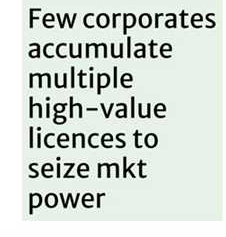
It reveals that licences concentrated across the value chain, resulting in the malpractices. A limited number of corporate groups "accumulated multiple high-value licences -- often spanning upstream and downstream infrastructure -- allowing them to consolidate market power in ways that policy didn't originally envisage".
"Summit Communications alone holds licences for Nationwide Telecommunication Transmission Network (NTTN), Submarine Cable Systems and Services, International Terrestrial Cable (ITC), International Internet Gateway (IIG), Interconnection Exchange (ICX) and tower sharing, placing it across nearly every critical layer of Bangladesh's digital backbone," the white paper reads.
Other companies identified as part of this "favoured few" include Fiber@Home Limited (NTTN, ITC, IIG), Novocom Limited (ITC, IIG, IGW), 1Asia Communication Limited (ITC, IIG, IGW), BDLink Communication Limited (ITC, IIG), and Mango Teleservices Limited (ITC, IIG, ICX, IGW).
The white-paper authors argue that such clustering of licences -- many of them adjacent in the value chain -- converted regulatory policy into "de facto cronyism, allowing select firms to dominate essential facilities while crowding out competitors".
Summit equity restructuring raises red flags. The most detailed case study in the white paper concerns Summit Communications' equity restructuring, which it says exposed procedural inconsistencies, valuation concerns and regulatory flip-flops with significant implications for state revenue and governance.
The transaction involved the issuance of 142,088,136 new shares at Tk 12 per share, amounting to Tk 1.70 billion, dramatically altering Summit's ownership structure.
Following the issuance, Global Energies (UAE) acquired roughly 49 percent, Sequoia Infra Tech (Mauritius) about 21 percent, while the chairman's direct holding fell from an estimated 95 percent to around 25 percent. The company's CEO retained a smaller stake.
Given Summit's control over a substantial portion of the national fibre backbone, the white paper notes, the restructuring amounted to a "de facto change of control", even though it was formally characterised as a new share issuance rather than a transfer of existing shares.
A major issue flagged in the report is the handling of the 5.5 percent share-transfer fee prescribed under a Bangladesh Telecommunication Regulatory Commission (BTRC) circular issued in November 2021.
In June 2024, BTRC's legal adviser opined that the issuance of new shares did not constitute a "transfer" and therefore fell outside the scope of the fee. On that basis, the transaction was initially allowed to proceed without any levy, despite its control-altering impact.
Following the political transition in August 2024, the regulator reversed its position and demanded the fee. Summit subsequently reported paying around Tk 100 million.
The white paper describes this reversal as a "fee flip-flop" that both privileged a large infrastructure operator at the outset and later undermined regulatory predictability. "Such selective interpretations weaken confidence in the rule of law and expose regulators to allegations of politicised enforcement."
Valuation and potential revenue leakage: The white paper also questions the Tk 12-per-share valuation, suggesting it may have been significantly below market value for a company controlling critical national infrastructure.
If undervaluation occurred, the report notes, the state may have suffered revenue loss in two ways: through a lower regulatory levy base for the 5.5-percent fee, and through the effective transfer of control at a discounted price, conferring competitive advantages on incoming shareholders.
The combination of permissive legal interpretation and low pricing, the paper argues, created a credible pathway for revenue leakage, highlighting the absence of robust, independent valuation and scrutiny prior to approval.
Beyond Summit, the white paper documents opaque share transfers, weak verification of beneficial ownership and inconsistent application of fees across several International Gateway operators. Such practices, it says, complicated dues recovery and eroded regulatory credibility.
Where infrastructure operators occupy "quasi-monopolistic or essential-facility positions", even semantic distinctions-such as whether a transaction is deemed a "new issuance" or a "transfer"-carry major consequences for market structure, public revenue and national strategic safeguards.
The perception-and in some cases the evidence-of differential treatment for politically connected or large-scale actors during the 2009-2024 period has, according to the white paper, undermined investor confidence, invited litigation and weakened enforcement of licence obligations.
In the end comes a call for audits and reform as remedies. The white paper recommends forensic audits of licensing, share transfers and revenue-sharing arrangements, particularly for firms holding multiple infrastructure licences.
It also calls for tighter rules on ownership changes, clearer definitions of control, and stronger safeguards against regulatory capture.
Without such reforms, the experts warn, Bangladesh risks repeating a cycle in which telecom policy serves private concentration rather than public interest, at substantial cost to state revenue and market integrity.
bdsmile@gmail.com
© 2026 - All Rights with The Financial Express