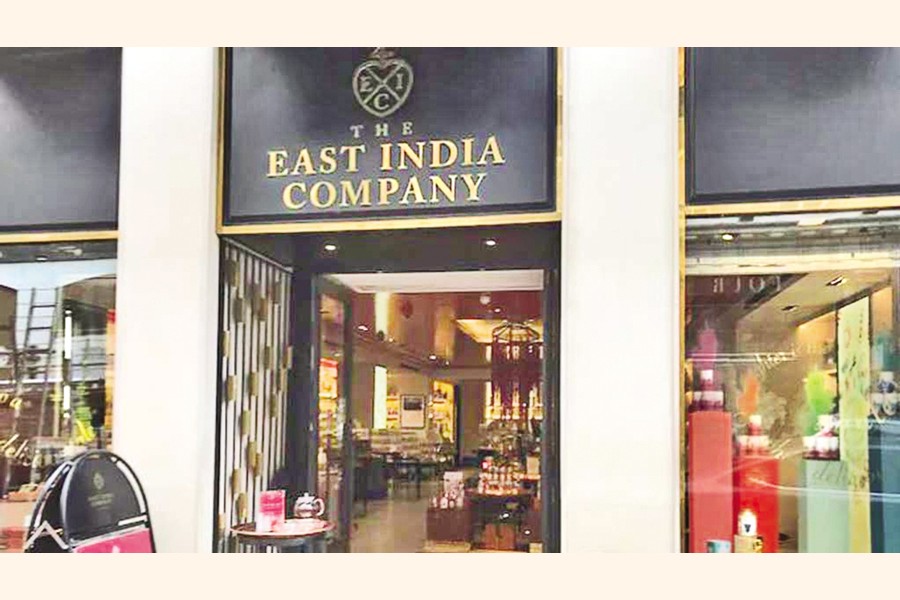
The East India Company, once the powerful British trading firm that ruled large parts of India, has shut down for a second time after its modern incarnation entered liquidation.
The original company, which played a central role in British colonial expansion in India, ceased to exist in the 19th century. It was revived in 2010 when British-Indian entrepreneur Sanjiv Mehta acquired the rights to the historic name and relaunched it as a luxury retail brand in London.
According to India Today, the modern East India Company Limited entered creditors' voluntary liquidation after accumulating debts of more than £950,000.
The Sunday Times reported that the company owed over £600,000 to its parent group registered in the British Virgin Islands, £193,789 in taxes and £163,105 to employees. Several related companies bearing the "East India" name and linked to Mehta have also been dissolved.
The company's website is no longer active, and its Mayfair store at 97 New Bond Street in London has reportedly been vacated and listed for rent. Another associated firm, East India Company Collections Limited, recently faced a winding-up petition from creditors, the report said.
From Empire-Builder to Luxury Brand
Founded in 1600 under a royal charter from Queen Elizabeth I, the English East India Company began as a joint-stock trading firm competing for spices and goods from Asia. Over time, it evolved into a territorial power, maintaining a private army and exerting control over vast regions of India.
Following the 1857 Indian Rebellion, also known as the Sepoy Mutiny, the British Crown assumed control of the company's territories in 1858, marking the beginning of direct colonial rule. The company was formally dissolved in 1874.
Its legacy remains controversial, associated with economic exploitation, military aggression and devastating famines during colonial rule.
When Mehta revived the name in 2010, the move drew international attention. The relaunch was widely viewed as symbolic, with headlines noting that an Indian entrepreneur now owned the name of a company once central to British rule in India.
The revived brand positioned itself as a luxury retailer, selling premium teas, chocolates, spices and other fine foods from a 2,000 square foot store in London's Mayfair district.
In a 2017 interview with The Guardian, Mehta said the modern company aimed to transform a symbol of colonialism into something positive.
"The fact that an Indian now owns the East India Company means that the negative has become a positive," he said at the time.
© 2026 - All Rights with The Financial Express